Product Detail
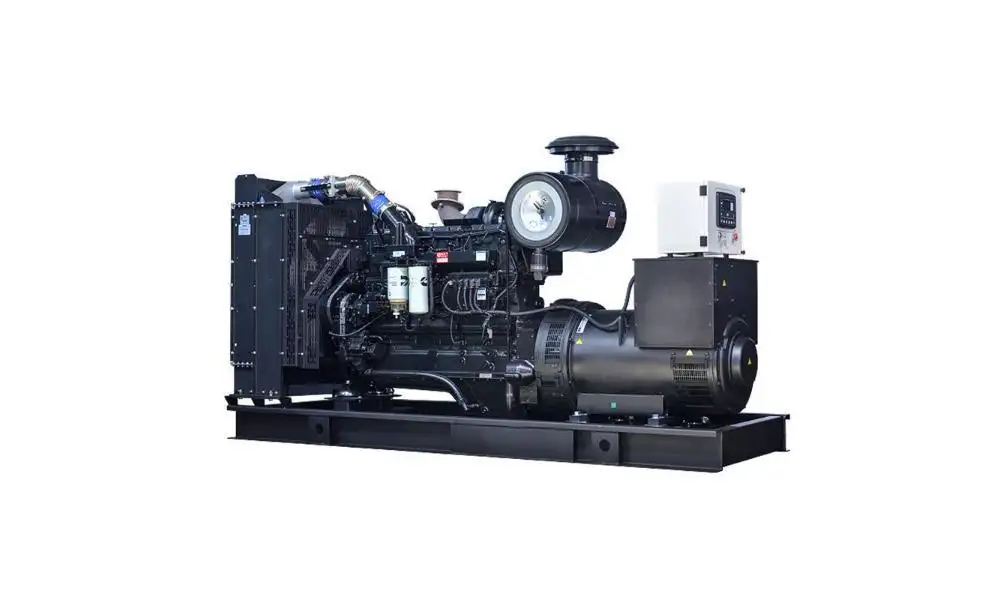
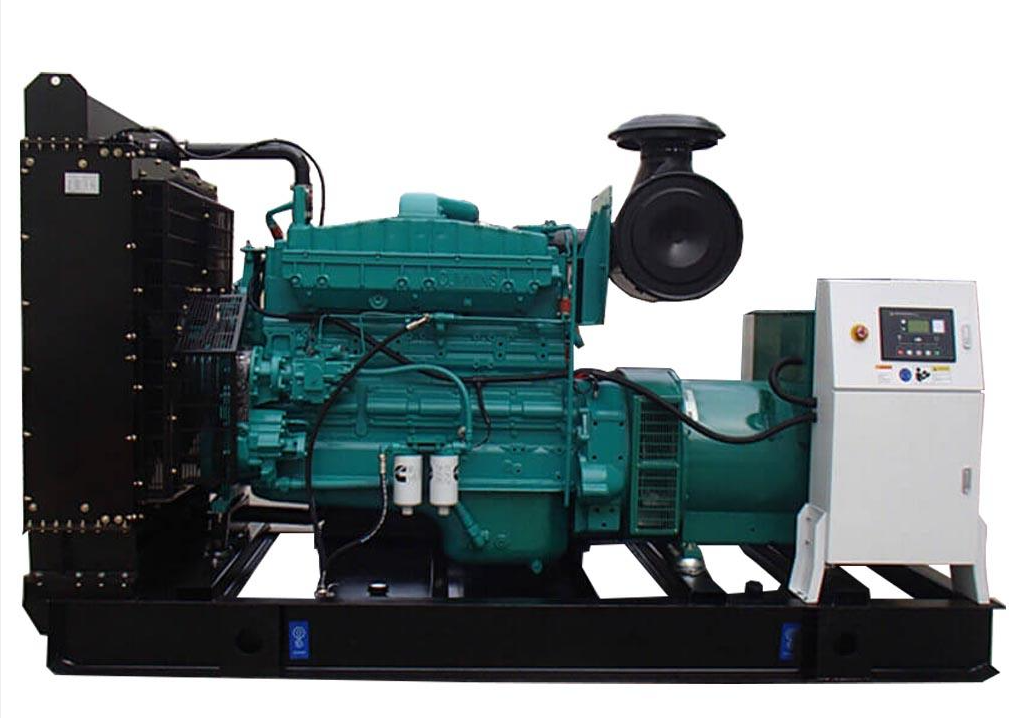
Cummins 800kW Open Diesel Generator
An 800 kW prime (880 kW standby, 1100 kVA standby) open-skid Cummins KTA38-G5 diesel generator set built at our Yangzhou factory, delivering 1440 A at 400/230 V and 50 Hz with a KCI-800 brushless copper alternator (IP23, Class H) and 200 g/kWh fuel consumption; built for continuous industrial prime power, data centers and plant standby duties.
Key Specifications
| Prime power | 800 kW / 1000 kVA |
| Standby power | 880 kW / 1100 kVA |
| Engine | Cummins KTA38-G5 series |
| Alternator | Brushless, self-excited |
| Voltage | 400/230V, 50Hz, 3-phase |
| Control | Digital controller |
| Starting | Electric start, 24V |
| Cooling | Water-cooled radiator |
| Fuel consumption | approx. 200 g/kWh at 100% load |
| Noise level | 102 dB(A) at 7m |
| Dimensions | 4450 × 1800 × 2350 mm |
| Weight | 8,000 kg |
Features
- Cummins KTA38-G5 V12 engine, 38 L displacement, 1500 rpm, turbocharged with electronic governor
- 800 kW prime / 880 kW standby at 400/230 V, 50 Hz, rated current 1440 A
- KCI-800 brushless synchronous alternator, IP23 protection, Class H insulation, copper winding, AVR regulated
- Closed-loop water cooling; steady-state voltage regulation ≤0.5%, transient voltage deviation ≤15%, voltage and frequency recovery within ≤3 s
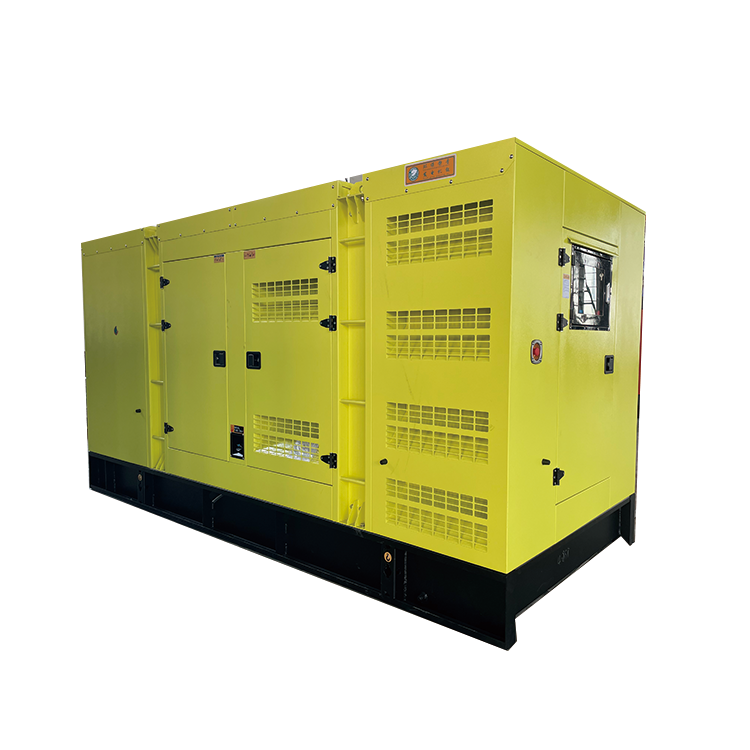
- Open skid baseframe with anti-vibration mounts, ready for indoor plant room installation or later acoustic canopy conversion
Application Scope
- Manufacturing plants and process lines
- Data centers and telecom stations
- Water treatment plants, pumping stations and public infrastructure
- Mining, oilfields and remote prime-power sites
Problems It Solves
- Delivering 800 kW of prime or standby load on a single proven skid
- Running continuously where the public grid is unreliable, weak or current-capped
- Building N+1 redundancy for large industrial facilities
- Preparing a plant room that can later receive an acoustic canopy without rebuilding the frame
Manufacturing & Quality Testing
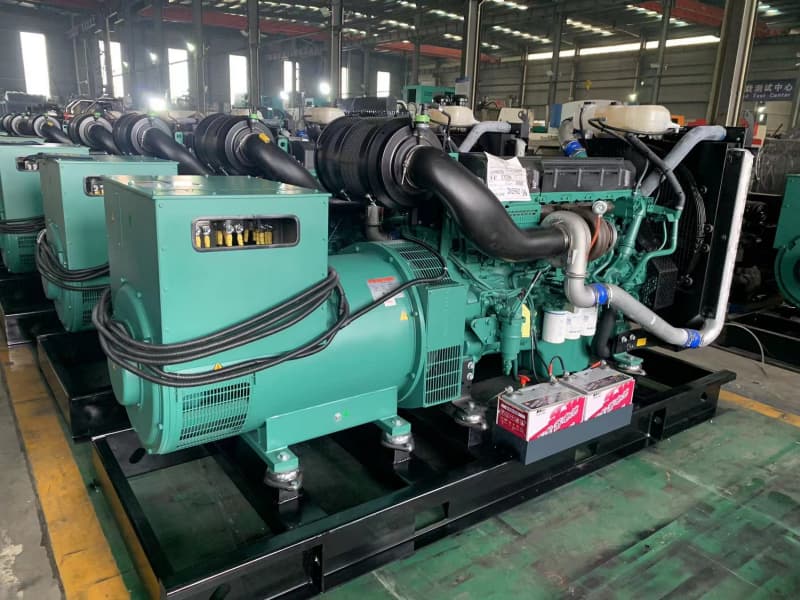
Every Kaichen diesel generator set passes through the same production line and test routine before it leaves our factory in Jiangsu. The process is built around one goal: the set arrives at your site ready to carry load on the first real outage, not after a month of debugging.
How each set is built
- Engine and alternator matching. We match the engine rating to the alternator at the exact power factor your site needs, not just at the nameplate number.
- Baseframe and tank. The skid is welded from steel plate, fitted with an integrated fuel tank, vibration isolators, and forklift slots before the engine is mounted.
- Wiring and control panel. Power and control wiring are routed in separate channels, terminal blocks are numbered, and the digital controller is pre-programmed for your voltage, frequency and ATS logic.
- Canopy or container. Silent sets are dressed with acoustic foam, vented panels and access doors; containerized sets receive weather-sealed doors, internal lighting and a socket for external power.
Load test before shipment
No set ships on a visual check. Each unit runs on our electronic load bank for a structured sequence, and the test report travels with the set:
| No-load run | Warm-up, oil pressure and charging voltage check |
| 25% load, 30 min | Stability of voltage and frequency, exhaust temperature |
| 50% load, 30 min | Governor response, fuel consumption, noise level |
| 75% load, 60 min | Cooling system, coolant temperature, belt tension |
| 100% load, 60 min | Full rated output, voltage regulation within ±1.5% |
| Overload 110%, 1 min | Protective shutdown and alarm verification |
Final inspection
- Insulation resistance and earth continuity tested after a damp-heat soak.
- All protective functions verified: over-speed, high water temperature, low oil pressure, over-current, emergency stop.
- Automatic transfer switch sequence tested end-to-end on a bench.
- Paint touch-up, cleaning, and a full spare-parts list packed in the toolbox.
CE and ISO 9001 certificates accompany each shipment. If you need a witness test, a third-party inspection (BV, SGS, TUV) report, or a site-specific FAT protocol, tell us before the set enters production and we will prepare it accordingly.