
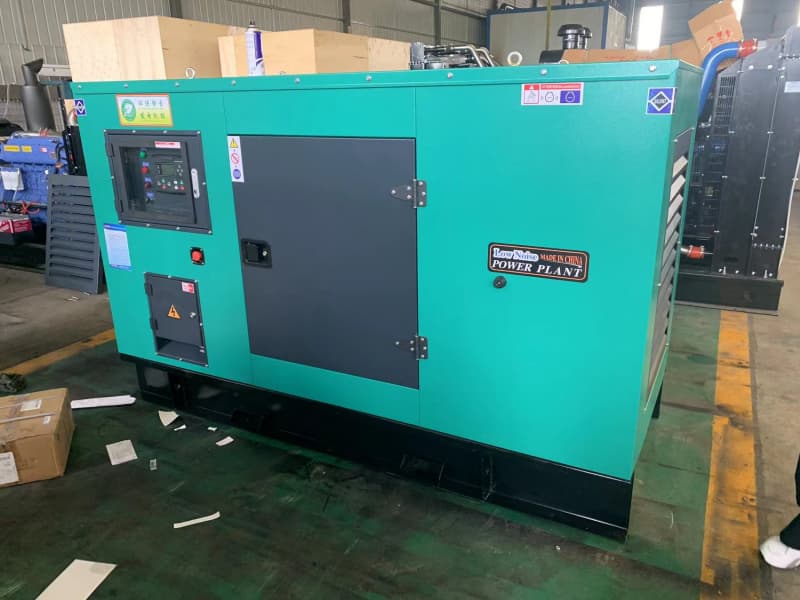
The whole point of a backup generator is invisible until the worst day. When the grid finally fails, you want one thing: it starts by itself, immediately, and keeps running. No button to press, no one to call.
So the real question is not "how many kW?" — it is "how do I know it will actually start when I need it?" Here is what experienced buyers check.
What makes a generator trustworthy
A reliable backup set is built from three things working together:
- A proven engine. It should be a commonly built, well-understood design — not an exotic one-off. The more it is used, the fewer surprises it holds.
- A controller that self-tests. Modern sets run quiet self-diagnostics and alert you if something needs attention, instead of finding out during an outage.
- Local service. When a filter clogs or a sensor trips, someone reachable can fix it quickly.
That third point is where many buyers save money and regret it later.
Why local service decides whether it "just works"
A generator that nobody locally can service is a generator that fails on schedule. The most common, widely-supported engines — like a Weichai block — have tiered service networks and common, inexpensive parts. Service day becomes routine, not a crisis. You are not waiting on an imported spare at 2 a.m.
That predictability is what makes a set the kind you forget about until you need it.
Your reliability questions, answered
| Your question | What to look for |
|---|---|
| Will it start on its own? | Yes — auto-starts on outage, returns when mains is back |
| How do I know it's healthy? | Self-testing controller, alarms, scheduled service |
| What if it faults? | Locally reachable technicians and common parts |
| Best fit | Factory, commercial building standby duty |
The honest limit
This reliability logic suits everyday standby — a factory, a shop, a plant. If your set carries life-critical or continuous prime power, you move up a class and add redundancy. For ordinary backup, a proven, locally-serviced engine on a good controller is exactly what "it just works" means.
Ask us to size a set you can rely on
Tell us what the generator has to power and where the site is. We will confirm local service coverage and quote a configuration you can actually trust to start.