
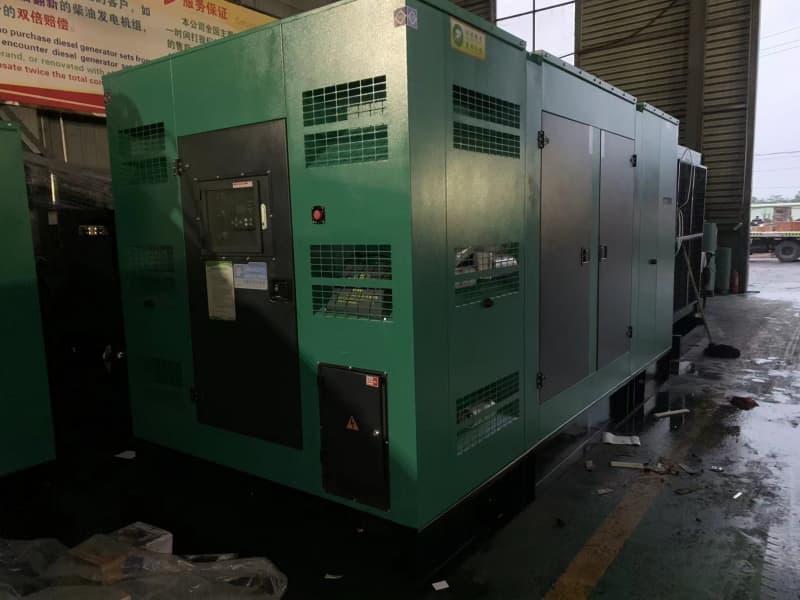
Almost everyone shops a generator by purchase price. Almost everyone forgets to ask the question that actually decides the cost: how much fuel will this thing burn, and how often will it run?
Let's work it out together, because the answer changes which engine you should buy.
Start with one number: how many hours will it run?
Before you compare engines, be honest about this:
- A set that runs once a year during a storm — fuel hardly matters. Buy the cheapest that rates.
- A set that runs hundreds of hours a year on a weak grid — fuel is your real budget, and efficiency matters a lot.
Same power, completely different buying decision.
Do the rough math
Say you need 400 kW and the set burns around 80 litres an hour at typical load. Over, say, 800 hours a year, that is tens of thousands of litres. A few percentage points of better fuel use — invisible on the brochure — is a serious saving every year, and it compounds over a decade.
This is why an efficient, strong-torque engine like a Scania block earns its keep: it holds its fuel economy even at partial load, which is where standby sets actually spend most of their time.
The traps buyers fall into
- Oversizing — buying a much bigger engine than you need. A big engine idling underloaded burns fuel for nothing and wears oddly.
- Ignoring partial load — efficiency at 100% power is nice, but you rarely run at 100%. Ask about efficiency at half load.
- Only reading the sticker price — the cheap engine looks great until the first fuel bill.
Your cost questions, answered
| Your question | Practical answer |
|---|---|
| How do I estimate fuel use? | Roughly litres/hour × your annual running hours |
| When does efficiency pay off? | When the set runs many hours per year |
| What does ~400 kW cover? | Large commercial buildings, hospitals, plants |
| Does a bigger engine always cost more to run? | Often yes — size to your real load |
The simple rule
If your generator runs a lot, buy the efficient engine. If it barely runs, don't overpay for efficiency you won't use. Either way, size it to your actual load — not a round number.
Send us your running hours
Tell us how many hours a year the set is likely to run and your average load. We will estimate fuel use for you and show you the break-even, so you choose with numbers rather than guesses.