
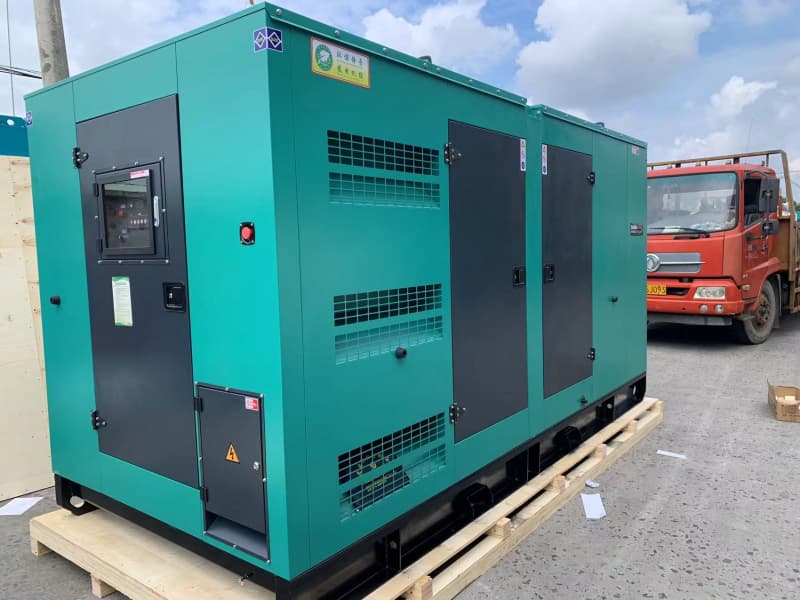
Modern buildings are picky. The generator cannot be a big ugly box in the corner — it has to be quiet enough for the office next door, small enough for a rooftop, and clean enough not to draw complaints.
If that sounds like your site, here is how buyers choose.
The three questions a modern building asks
Instead of "how many kW?", a contemporary project usually asks:
- Will it fit? Rooftops and courtyards are valuable space. A bulky engine costs you rentable area.
- Will it be too loud? Offices, wards and hotel rooms cannot share a wall with a noisy diesel set.
- Will it look and run dirty? Building owners increasingly care about emissions and appearance.
A compact, efficient engine — like a Volvo Penta block — paired with a quality canopy is built around exactly these three.
What that means when you choose
- Smaller footprint leaves room for HVAC, cooling and the access path your maintenance team needs.
- A good acoustic canopy brings noise down to a level an office or hospital accepts.
- Efficient, clean combustion keeps fuel use and visible emissions lower — something a sustainability team actually notices.
Your questions, answered
| Your question | Practical answer |
|---|---|
| Can it live on a rooftop? | A compact, canopied set is designed for it |
| Will it disturb the offices? | Quality canopy keeps noise ~72 dB(A) |
| Is it cleaner than a basic set? | Efficient, lower-emission combustion |
| What power range? | ~300 kW covers mid-to-large buildings |
When you shouldn't overspend
This is a refined, premium-positioned package. If your generator hides in a bare-bones machine room in the countryside, no one cares about its footprint or quietness — buy the simpler, cheaper option. The compact-and-quiet choice earns its place precisely where the building itself is modern and occupied.
Tell us your space
Send us the rooftop or courtyard dimensions and the nearest occupied room. We will confirm whether a compact ~300 kW canopied set fits — before your architects finalise the layout.