
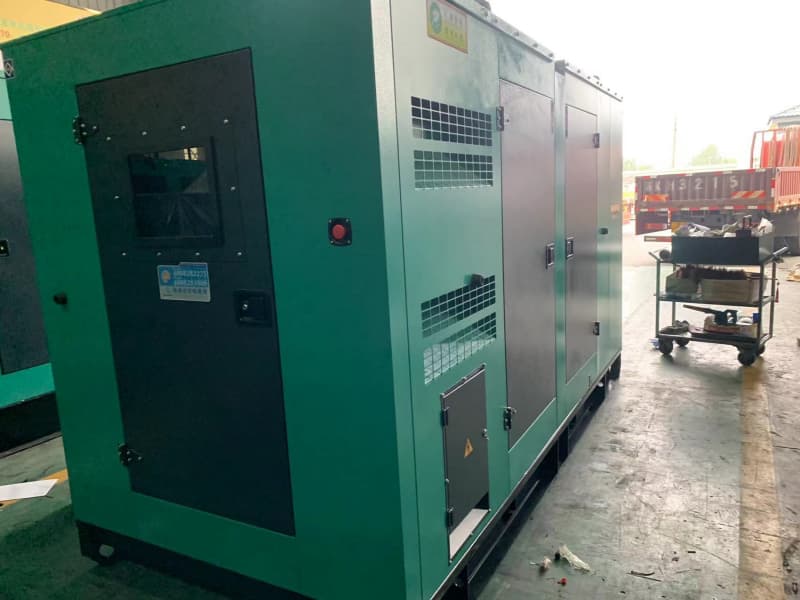
If you have ever compared generator quotes, you have seen it. Two boxes, similar dimensions, similar rated power, similar promises on the brochure. One costs noticeably less. The sales engineer shrugs and says "it is the same thing, just a different engine."
It is not the same thing. The engine is the thing that decides whether the set is still running in seven years, or whether it is waiting on a spare part that ships from another continent.
What the engine actually controls
The canopy, the alternator, the controller and the breakers are all shared technology. Buyers compare these and feel confident. But the engine decides:
- Lifespan in hours. A well-machined block, correct metallurgy, and a fuel system that tolerates local diesel quality add up to tens of thousands of extra hours before a rebuild.
- Spare-part availability. Filters, gaskets, injectors, turbochargers. On a bad Tuesday at 2 a.m., the question is whether your local dealer has the part on the shelf.
- Resale value. A used Perkins- or Cummins-based set sells faster and closer to its asking price, because the next buyer knows what they are looking at.
- Fuel tolerance. In markets where diesel quality varies, a robust mechanical engine keeps running where an electronic common-rail unit throws a fault code.
Who picks Perkins, and why
Perkins engines are common in the 200–400 kW range for one reason: they are a global reference. Dealers exist on most continents, fuel-filter kits ship the same day, and the engine's mechanical character is well known to service technicians.
A 280 kW Perkins-based silent set usually lands with buyers who:
- Export machinery to countries where local service networks matter more than a sticker price.
- Run hospitals, hotels or mid-size factories where an unplanned two-week outage is not acceptable.
- Want a set that holds its value when the business changes hands.
That is not a claim that Perkins is the only good choice. It is a description of the buyers who end up there after comparing options.
When a more local engine wins
There is another side. If the set is installed in a region where a domestic Chinese or Indian engine brand has dense local service, and the budget is tight, the math changes. A locally supported Shangchai or Yuchai set at the same 280 kW may cost less up front and fix faster. The engine may not carry the same global resale story, but if the set will never leave your site, that story does not matter.
This is why we do not push a single engine brand. We ask where the set will live, what the local workshop stocks, and how many hours a year it will run. Then the recommendation follows.
A useful comparison, not a winner's podium
| Question | Perkins-leaning choice | Local-engine-leaning choice |
|---|---|---|
| Will the set be exported or resold? | Yes | No |
| Is local service dense for the domestic brand? | No | Yes |
| Long prime hours, weak-grid site? | Yes | Sometimes |
| Tight capital budget? | No | Yes |
| Sensitive load (hospital, server room)? | Yes | Depends on controller spec |
The question to ask your supplier
The single most useful question on a quote: *"If a fuel pump fails next February, how long until the part is on my floor?"*
The answer tells you more than the nameplate does. If the answer is "two days, on the shelf," the engine brand on the canopy is probably the right one for your site. If the answer is "six to eight weeks by sea," look again.
We will answer that question openly, because we would rather size the right set now than service the wrong one later.