
You run a small factory, a workshop, or a farm. You know you need backup power. But the one number nobody will give you straight is: how big does it actually need to be?
Buy too big and you overspend. Buy too small and it shuts down the moment a motor switches on. Let's keep it simple.
The two numbers to work out
Forget complicated calculations. Start with two things:
- What has to keep running when the power goes out? (Not everything — just the essentials.)
- Which of those things are motors or pumps that draw a big surge when they start?
List those, and you have the heart of the sizing problem.
Why "add it all up" is not enough
Adding up the running power gets you close, but the motor surge is the trap. When a compressor or pump starts, it pulls several times its normal power for a moment. A generator sized on the running total alone will stutter on that first start — exactly when you need it most.
That is why experienced buyers either over-size slightly for motor starts, or have us look at the load list for them.
The rule of thumb for small sites
After a few projects, people settle on simple guides:
- Run the generator at about 70–80% of its rated power in normal use.
- A small workshop, farm or shop cluster often lands around 100–250 kVA — which is roughly an 80–200 kW set.
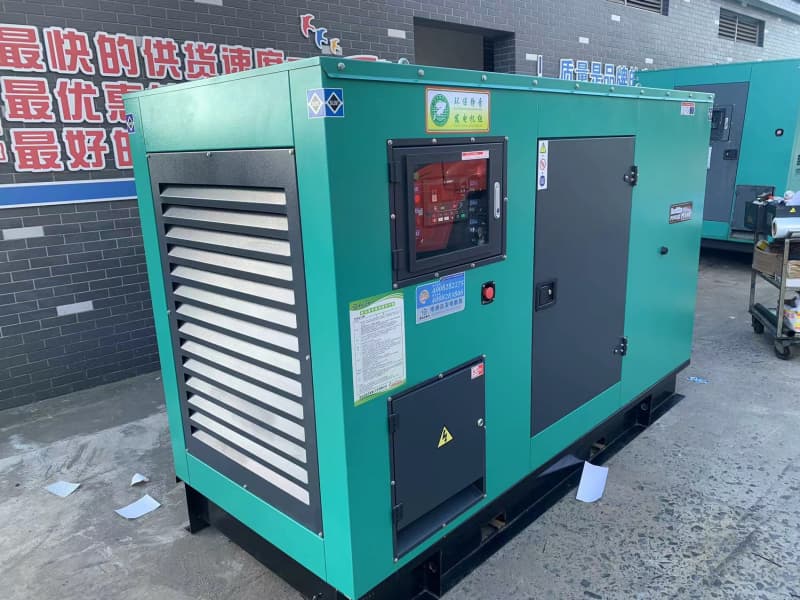
- If you are near the top of that range, a 200 kW (250 kVA) silent set is a sensible, economical choice.
Your sizing questions, answered
| Your question | Practical answer |
|---|---|
| How do I start? | List essentials + motors that start on surge |
| Is bigger safer? | No — oversized wastes fuel and wears oddly |
| What if I grow later? | Pick a set a little above your current load |
| Roughly where does a small site land? | Often 80–200 kW standby |
The honest caveat
If your business is growing fast, or you will run the set for many hours a day, plan ahead — size up and look at efficiency. For ordinary backup duty on a small working site, a sturdy, economical 200 kW silent set is a measured, low-risk purchase.
Tell us what you power
Send us the list of essentials and motors. We will size the generator to your real load — not a round number — and give you a price you can budget for.