
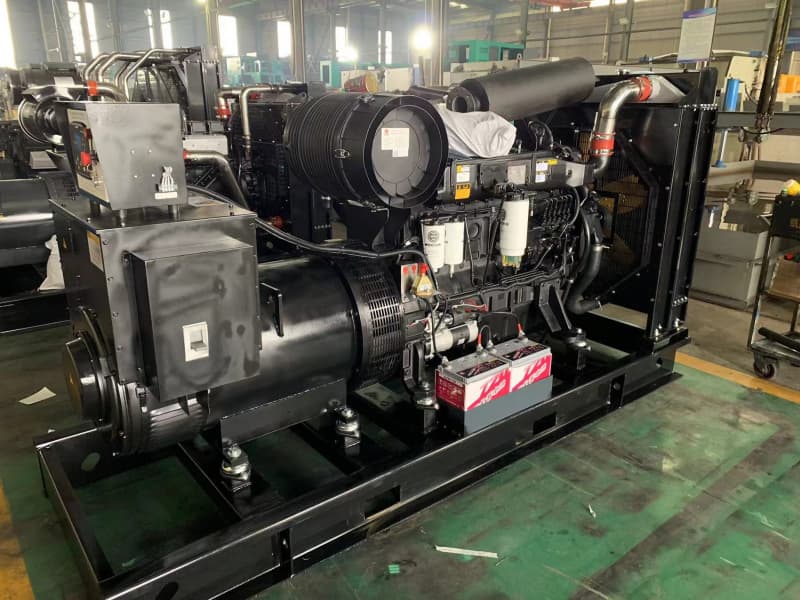
A high-water-temperature alarm rarely appears out of nowhere. It usually builds for weeks: the radiator fins fill with dust, the belt begins to slip, the coolant level drops slowly, and the controller keeps watching a temperature curve that climbs a little further every summer afternoon. When the mains finally drops and the set picks up a real load, the protection trips at the worst possible moment — during a factory production run, a hospital transfer, or a data-center peak.
This guide covers the practical diesel generator overheating causes our service team sees most often, the check for each one, and the repair or prevention step that follows. The intervals and protection logic come from our after-sales Q&A records and KC series service practice at our Yangzhou factory; exact temperature setpoints always follow the specific engine manual, because Cummins, Perkins, Volvo, Weichai, Yuchai and other models use different controller thresholds.
Before shipment, every Kaichen set runs on our in-house digital load bank through a fixed sequence, including 75 % and 100 % holds where coolant temperature, belt tension and cooling stability are recorded. A unit never loaded in the factory can still overheat on site if room or canopy airflow was planned badly, so installation conditions matter as much as the machine.
1. Why the overheat alarm matters before it stops the set
The controller does not invent a fault. It compares the coolant sensor signal with the protection parameters stored in the module: high water temperature, low oil pressure and overspeed are the three automatic shutdowns that appear most often in our service records. If the high-temperature protection fires, the set cuts fuel and shuts down; repeatedly forcing a restart before the root cause is removed risks warping a cylinder head, damaging the water pump, or pushing oil past worn seals.
Two safety rules sit above every diagnosis:
- Do not open the radiator cap on a hot engine. Pressurized coolant can flash to steam and scald the operator. Let the set idle down and cool, then check the level.
- Do not mask the alarm to keep running. A protection trip exists to save the engine; bypassing it on site usually turns a clean cooling-system repair into a major engine overhaul, and damage caused by running on a disabled protection circuit is outside warranty.
The first useful piece of information is the controller fault code and the temperature trend before shutdown. Read the code, photograph the controller screen, and note the load percentage, ambient temperature and how long the set had been running. Remote support can then narrow the branch of the checklist below before an engineer visits.
2. What normal cooling looks like
A diesel engine converts only part of the fuel energy into shaft power; the rest leaves as heat through the exhaust, the lubricating oil and the coolant circuit. The radiator, fan, thermostat, water pump and hoses must remove that heat continuously, especially when the set carries 70–80 % of rated output for hours.
The figures below are typical reference ranges for a 50 Hz industrial diesel set; the engine manual and controller parameter sheet remain authoritative:
| Observation | Typical reference range | What it means |
|---|---|---|
| Coolant after warm-up | About 75–85 °C | Engine has reached operating temperature |
| Normal running coolant | About 80–95 °C | Stable, controlled heat rejection |
| Warning level | Often around 95–98 °C | Start checking coolant, fins, belt and load |
| High-temp shutdown | Commonly 98–105 °C, set in controller | Protection trip; do not reset and reload until cause is fixed |
| Ambient site temperature | Manual derating usually begins above 40 °C | Hot rooms and direct sun reduce cooling margin |
If the temperature climbs steadily from the first minute after start, the problem is usually circulation or airflow. If it only climbs under load, the usual suspects are overload, a partially blocked radiator, a slipping belt or a thermostat that opens late. If it rises only on hot summer afternoons, ventilation and dust are the most likely drivers.
3. Eight overheating causes and the check for each
3.1 Coolant level low or coolant degraded
Low coolant is the most common cause and the cheapest to find. Check the expansion tank and radiator level after the engine has cooled; never rely on a quick visual glance at a pressurized system.
Why it happens: leaks at hose clamps, the water-pump seal, thermostat housing or radiator side tank; evaporation through the pressure cap; aged coolant that has lost corrosion inhibitor; and tap water added in an emergency, which leaves mineral scale and sediment in narrow water jackets.
Checks:
- Inspect hoses, clamps, drain cock and radiator seams for wet stains or dried marks.
- Confirm the pressure cap rating and that the overflow pipe is not blocked.
- Test coolant concentration and pH when antifreeze or long-life coolant is specified.
Fixes and prevention:
- Top up with approved long-life coolant; in a short emergency use distilled water rather than tap water, then restore the mixture to specification.
- Coolant first service is around 500 hours, then every 2,000 hours or two years, whichever comes first.
- Do not mix different brands or coolant types; incompatible chemistries form sludge and scale.
3.2 Radiator core blocked by dust, seeds and construction dirt
Fins look clean from three metres away while the inside air path is half closed. Cottonwood seeds, farm dust, cement powder, leaves and workshop lint stick to the grille, reduce airflow and raise both coolant temperature and exhaust temperature together.
Checks:
- Switch off and lock out the set, then look through the core from the fan side toward the ambient side; blocked channels are visible as dark or clogged bands.
- Check the air-intake filter at the same time: a plugged air filter raises exhaust gas temperature and forces the engine to work harder for the same electrical output.
- In dusty sites, record radiator cleaning on the same monthly sheet as filter inspection.
Fixes:
- Clean from the ambient side toward the fan side with low-pressure air or a soft brush; high-pressure washing can bend the thin fins and make the core worse.
- Straighten bent fins with a fin comb, renew the core if a row of tubes has rotted through, and fit a coarse pre-screen where cottonwood or construction dust is seasonal.
3.3 Fan belt slipping, loose or worn
A slipping belt turns the fan slowly while the engine speed gauge looks normal, so the operator assumes the cooling system is at work. Glazed surfaces, cracking, fraying, incorrect tension and a worn tensioner pulley all point the same way.
Checks:
- With the engine stopped, press the belt mid-span; most engines call for roughly a 10–15 mm deflection under moderate thumb pressure, always per the engine manual.
- Listen for a high-pitched squeal that rises with load; inspect for oil contamination on the belt surface, which prevents grip.
- Confirm belt alignment between crankshaft pulley and fan pulley; a misaligned set wears the belt rapidly.
Fixes:
- Retension or replace a cracked, glazed or oily belt; keep a spare belt on site for critical facilities.
- Inspect the belt at every routine service and after any cooling-system repair, because a new belt stretches during its first running period.
3.4 Thermostat stuck closed or opening late
The thermostat controls coolant flow to the radiator. If it stays closed, heat builds in the engine block while the radiator itself remains relatively cool — a useful diagnostic contrast.
Checks:
- After a warm alarm, compare the upper and lower radiator hose temperatures carefully on a cool, locked-out engine; a cold lower hose while the block is hot points to a circulation fault.
- Measure opening temperature against the manual before assuming failure; a thermostat rated for the wrong opening temperature wastes hours of diagnosis.
- Look for a slow warm-up followed by sudden overshoot once the thermostat finally opens.
Fixes:
- Replace the thermostat and its seal as a matched set; reuse a seal only when the manual permits.
- Refill the system slowly, burble the air out through the vent points, and verify heat builds steadily on the next load run.
3.5 Water pump losing circulation
The pump drives coolant through the block, head, thermostat and radiator. Impeller wear, a failing mechanical seal, cavitation from low level, or a loose drive means circulation falls while noise may still be normal.
Checks:
- Look for coolant weeping from the pump weep hole; a wet stain around the seal housing usually precedes a larger leak.
- Check pump pulley play and shaft wobble by hand after shutdown.
- Compare the return flow into the expansion tank with a healthy reference; weak flow means the pump or the air lock must be addressed.
Fixes:
- Replace the pump kit when seal or impeller wear appears; do not top up and continue on a weeping pump indefinitely.
- Bleed air after coolant work; an airlock behaves like a pump failure even when the impeller is sound.
3.6 Running overloaded or beyond its intended duty
A generator rated for standby duty is not built for weeks at full output, and a site that repeatedly asks 100 % or more of the set will see heat, fuel and wear all rise together. Our service guidance keeps sustained high load inside about 90 % of rated output, with the economic and reliability sweet spot around 70–80 %.
Checks:
- Read controller kW, kVA and current against the nameplate during the alarm, not only at idle.
- Separate running load from motor-starting current; a compressor or pump can impose a large transient even when average kW looks modest.
- Compare fuel use and exhaust temperature with the datasheet; persistent overload raises both.
Fixes:
- Shed non-essential loads, stage large motor starts with soft starters or VFDs, or add a second set in parallel rather than forcing one unit past its duty rating.
- Avoid long operation below about 30 % load: light running causes wet stacking, carbon build-up and oil dilution; a monthly meaningful-load run keeps the engine clean.
- New engines need break-in; the first hours should avoid long full-load operation so piston rings and bearings seat properly.
3.7 Plant-room or silent-canopy airflow problems
An open set outdoors usually cools if the fan and radiator are sound. Indoor and silent-canopy sets fail thermally when the air path was not planned: a small inlet louvre, a duct that recirculates hot exhaust air, or a silent enclosure where the radiator discharge cannot leave the box.
Checks:
- Measure air movement at the inlet and outlet; the hot side must exhaust outside, not back into the room.
- On canopy sets, inspect the internal baffles that separate cold intake air from the hot radiator discharge; a missing or displaced baffle creates short-circuit airflow.
- Check that the room has a positive path for make-up air and that doors or grilles were not blocked after installation.
Fixes:
- Increase inlet and outlet free area, route the radiator discharge directly outside, and seal the recirculation path between cold and hot zones.
- Position the set away from direct sun and walls that trap heat; leave service clearance at the alternator end and around the radiator.
- For heat-exchanger or marine-type cooling, verify the seawater or freshwater pump strainer and flow, because a blocked side circuit can raise the engine temperature even when the box itself looks normal.
3.8 Scale, corrosion, hoses, exhaust restriction and altitude derating
Long-term factors often accumulate while the easy checks pass: mineral scale inside the water jacket, rubber hoses that harden and collapse under suction, corroded tubes in the core, a blocked exhaust silencer or long exhaust pipe, and high-altitude air-density loss.
Checks:
- Ask for cooling-system history: coolant brand, top-up water type, last flush and age of hoses.
- Inspect exhaust back-pressure evidence: black smoke, reduced power, high exhaust temperature and red-hot muffler sections under load.
- At altitude, confirm the engine's naturally aspirated or turbocharged rating matches the site elevation; engines lose air mass and must be derated or matched accordingly.
Fixes:
- Flush and refill to specification on the service plan; replace aged hoses before they split under pressure.
- Verify exhaust diameter, bend count and silencer size against the supplier's maximum back-pressure allowance.
- Match the generator rating to altitude and ambient temperature during sizing; changing an alternator or selecting the right duty at quotation time costs far less than replacing an overheated engine later.
4. Emergency sequence when the overheat alarm sounds
Field records show that the fastest correct response prevents most damage. Follow this order rather than reaching for the reset button:
- Reduce the load. Transfer non-essential circuits away and let the controller observe the temperature trend; a sudden cold shutdown after high load can increase thermal stress.
- Leave the engine at idle briefly to let the water pump and oil pump circulate, then stop once the temperature falls and the operator can attend safely.
- Do not open the pressure cap while the system is hot; wait until the engine is warm to touch and the pressure has released.
- Record the fault code, load %, ambient temperature, running hours and any leak marks, then photograph the controller and coolant level.
- Check coolant, belt, fins and ventilation in that order, and only refill after confirming the leak path; never start the unit on a dry or near-dry cooling system.
- Bleed air and perform a controlled load test after repair: start unloaded, check temperature stability, then step load through 25 %, 50 %, 75 % and full load before returning to normal service.
5. Symptom-to-cause diagnostic table
| Visible symptom | Most likely cause | First check | Typical action |
|---|---|---|---|
| Hot block, cool lower radiator hose | Thermostat or airlock | Hose temperature after cool-down; bleed points | Replace thermostat, bleed system |
| Wet stains at pump seal | Water-pump seal wear | Pump weep hole, pulley play | Replace pump kit |
| Belt squeal under load | Slipping or glazed belt | Tension, oil on belt, pulley alignment | Retension or replace belt |
| Overheat only when dusty or warm | Blocked radiator fins / poor airflow | Look-through core, grille, canopy baffle | Clean fins, restore airflow path |
| Temperature follows kW upward | Overload or duty mismatch | Controller kW/kVA/current vs nameplate | Shed load, stage starts, resize or parallel sets |
| Coolant level drops slowly with no wet spot | Cap, clamp or hidden hose leak | Pressure test, inspect seams and clamps | Repair leak, top up approved coolant |
| Hot room or hot canopy interior | Air short-circuit or undersized louvres | Inlet/outlet air movement, baffles | Re-duct hot discharge, seal recirculation |
| Low power, black smoke, high exhaust temp | Air filter, exhaust restriction, altitude derating | Filter indicator, exhaust condition, elevation | Service filters, check back-pressure, match rating |
6. Cooling-system maintenance schedule
Our service records support a simple layered plan; shorten every interval in dusty, hot or continuously loaded conditions.
| Frequency | Cooling-related task | Reference basis |
|---|---|---|
| Weekly | Visual check of coolant level, leaks, belt appearance, grille blockage; run the set briefly under load where site safety allows | Standby set habit; prevents surprises before an outage |
| Monthly | Start exercise, belt tension check, radiator visual clean, battery charging voltage check (typically around 28 V on 24 V systems) | Monthly exercise keeps batteries charged and combustion clean |
| Every 250 h (heavy duty) / 500 h (light duty) | Oil and oil-filter change; inspect coolant condition and hose clamps; record temperature trend under load | Service records for continuous and standby duty |
| About 500 h | First coolant service after break-in; replace fuel and air filters on the recommended cycle | Factory break-in and filter guidance |
| Every 2,000 h or 2 years | Full coolant replacement, flush if scale suspected; inspect water pump, thermostat and hoses | Coolant chemistry degradation cycle |
| Annually | Full cooling-system inspection, controlled load-bank run, protection-function test, belt and hose condition review, coolant sample check | Annual comprehensive service |
| Battery life plan | Inspect battery condition; typical standby batteries plan replacement around 2–3 years, maintenance-free types often 3–4 years | Charging system and flooded-cell aging records |
One practical note: a monthly no-load run for ten to fifteen minutes keeps the battery topped up, but a monthly run at meaningful load — our records suggest at least about 50 % load for roughly an hour where feasible — burns off moisture and soot that low-idle running leaves behind.
7. How Kaichen protects the cooling circuit before shipment
Every Kaichen set assembled at our Yangzhou factory goes through the same load sequence on the in-house digital load bank before dispatch, and the cooling system receives attention at the higher steps:
| Test step | Hold | Cooling-system focus |
|---|---|---|
| No-load warm-up | — | Oil pressure, charging voltage, warm-up rate |
| 25 % load | 30 min | Stable temperature trend, exhaust temperature |
| 50 % load | 30 min | Governor response, fuel use, belt stability |
| 75 % load | 60 min | Coolant temperature, coolant circulation, belt tension, hose clamp security |
| 100 % rated load | 60 min | Full heat rejection at nameplate, voltage regulation within tolerance |
| 110 % overload | 1 min | Protection trip, including high-temperature alarm verification |
After the run we verify insulation and earth continuity after thermal cycling, check each protection function — overspeed, high water temperature, low oil pressure, over-current and emergency stop — and test the ATS changeover logic on the bench; the test report travels with the set.
Our standard whole-set warranty is one year or 1,000 running hours, whichever comes first, with longer coverage on core engine, alternator and control components under the contract; filters, oil, coolant, belts and batteries are consumables, and damage from disabled alarms, missing coolant, sustained overload or skipped maintenance is excluded. A clean cooling plan preserves warranty coverage; repeated alarm masking does not.
We build open-skid, silent, containerized and trailer sets from 20 kVA to 3,000 kVA using Cummins, Perkins, Volvo, Weichai, Yuchai, Scania, Mitsubishi and Shangchai engine platforms, paired with our own KCI brushless copper alternators in IP23, Class H insulation with AVR regulation. OEM and ODM projects are welcomed, with remote commissioning support and spare-parts planning for the first service interval.
Frequently asked questions
Can I add water to a hot diesel generator radiator?
No. Wait until the engine cools, open the cap carefully, and top up with approved coolant; use distilled water only in a short emergency and replace the mixture to specification afterward. Tap water causes scale and corrosion.
Why does the generator overheat mainly at noon in summer?
High ambient temperature raises the radiator inlet air temperature, while dust and a poorly ventilated room reduce heat rejection. Clean the core, check the belt and canopy baffles, ensure hot air leaves the room, and keep sustained load near the recommended operating band rather than at maximum output.
Does overheating damage the warranty?
A factory cooling defect is covered under the warranty terms. Damage caused by low coolant, disabled alarms, sustained overload, missed filter and coolant service, or non-approved additives is treated as consumable or maintenance-related exclusion. Keep service records and alarm logs to support any claim.
How often should the radiator be cleaned?
Inspect monthly in normal use and weekly in dusty, agricultural or construction environments; clean the core before hot season and after any visible clogging. Inspect the fan belt at the same visit and replace it before it cracks or glazes.
Next step
If the set has already alarmed once, send us the controller fault code, running hours, rated kW, ambient temperature and a short video of the room or canopy airflow; our technical team can tell whether the issue is a serviceable cooling component or a sizing/ventilation problem before a heavy repair. Related reading: the generator maintenance checklist covers the monthly and annual service tasks, and why a diesel generator will not start explains the protection and battery side of an alarm event. For machine examples, see the Cummins 400kW open diesel generator and Cummins 800kW open diesel generator pages, or contact our sales and engineering team with your load schedule and site conditions.